An AI assistant that only knows what's on the public internet can write a polite email. One that can see your stock levels, open orders and customer history can tell you which customer to call today, and why. The difference is a connection to your own systems, and over the past two years one standard has become the usual way to build it: the Model Context Protocol, or MCP.
The short version: MCP (Model Context Protocol) is an open standard for connecting AI applications to external systems such as databases, CRMs, ERPs, files and business tools. Anthropic released it in November 2024 and donated it to the Linux Foundation's Agentic AI Foundation in December 2025. It's supported by ChatGPT, Claude, Gemini, Microsoft Copilot, Cursor and Visual Studio Code. For a business, it means one well-built connector lets several AI assistants work with your data, under your rules.
What is MCP, in plain terms?
The project describes MCP as "a USB-C port for AI applications". Before USB-C, every device needed its own cable. Before MCP, every AI tool needed its own custom integration for every system.
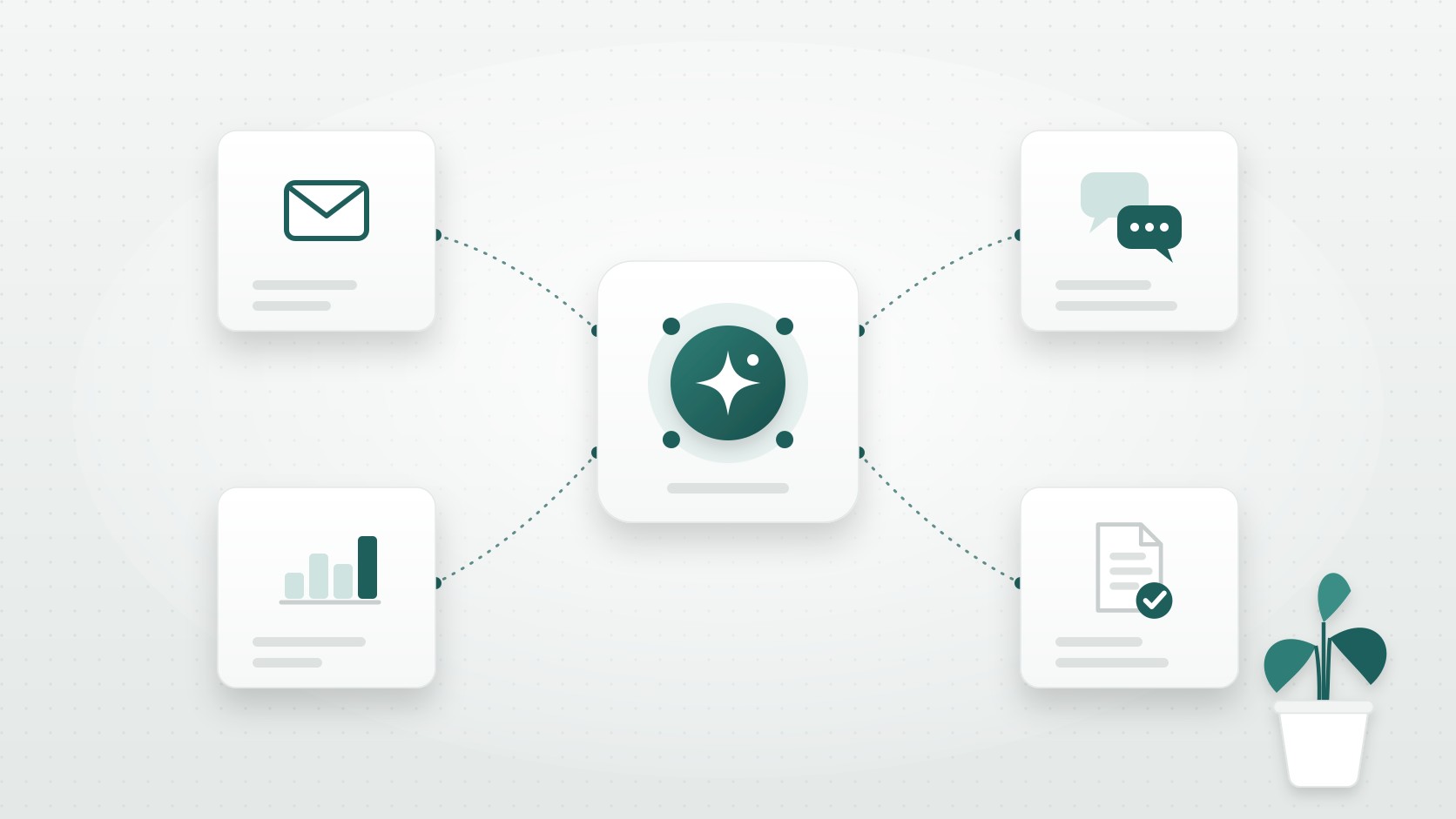
With MCP, you build one MCP server for a system, for example your ERP. The server defines what an AI may do there: look up a customer, list overdue invoices, check stock for a product, prepare a draft quote. Any AI application that speaks MCP can then use those tools, within the permissions you set.
Where did MCP come from?
- November 2024: Anthropic open-sourced MCP, created by David Soria Parra and Justin Spahr-Summers, together with ready-made servers for tools such as Google Drive, Slack, GitHub and Postgres.
- 2025: Adoption spread across the industry. By December 2025, MCP was supported by ChatGPT, Cursor, Gemini, Microsoft Copilot and Visual Studio Code, with more than 10,000 active public MCP servers and over 97 million monthly downloads of its software development kits.
- December 2025: Anthropic donated MCP to the Agentic AI Foundation, a fund under the Linux Foundation co-founded by Anthropic, Block and OpenAI, and supported by Google, Microsoft, AWS, Cloudflare and Bloomberg.
That last step matters for businesses. MCP isn't one vendor's feature; it's a shared standard with neutral governance. A connector you build today should keep working as you add or switch AI tools.
What can MCP do for a business?
Here are questions and tasks that become possible once your systems are connected:
- Sales (CRM): "Which leads from last week haven't been contacted yet?" "Summarize everything we know about this customer before my call." "Log this call and set a follow-up for Thursday."
- Operations (ERP): "Which products will run out in the next two weeks at the current sales rate?" "Which purchase orders are late?" "Prepare a reorder for items below minimum stock."
- Finance: "Which invoices are more than 30 days overdue, and who are the five customers with the largest outstanding balance?"
- Customer service: "What's the status of order 1042?", answered from the real order record instead of a guess.
- Management: a weekly summary built from live numbers instead of exported spreadsheets.
The AI handles the language and the reasoning. Your systems remain the source of truth.
How does MCP work?
There are three pieces:
- The host: the AI application your team uses, such as Claude, ChatGPT or an assistant built into your own software.
- The client: the part of that application that speaks MCP.
- The server: a small service in front of your system that offers tools (actions), resources (data) and prompts (ready-made workflows).
When someone asks a question, the AI decides which tools it needs, calls them through MCP and uses the results in its answer. It can only do what the server exposes, which is exactly where your control lies.
The risks, and how to connect safely
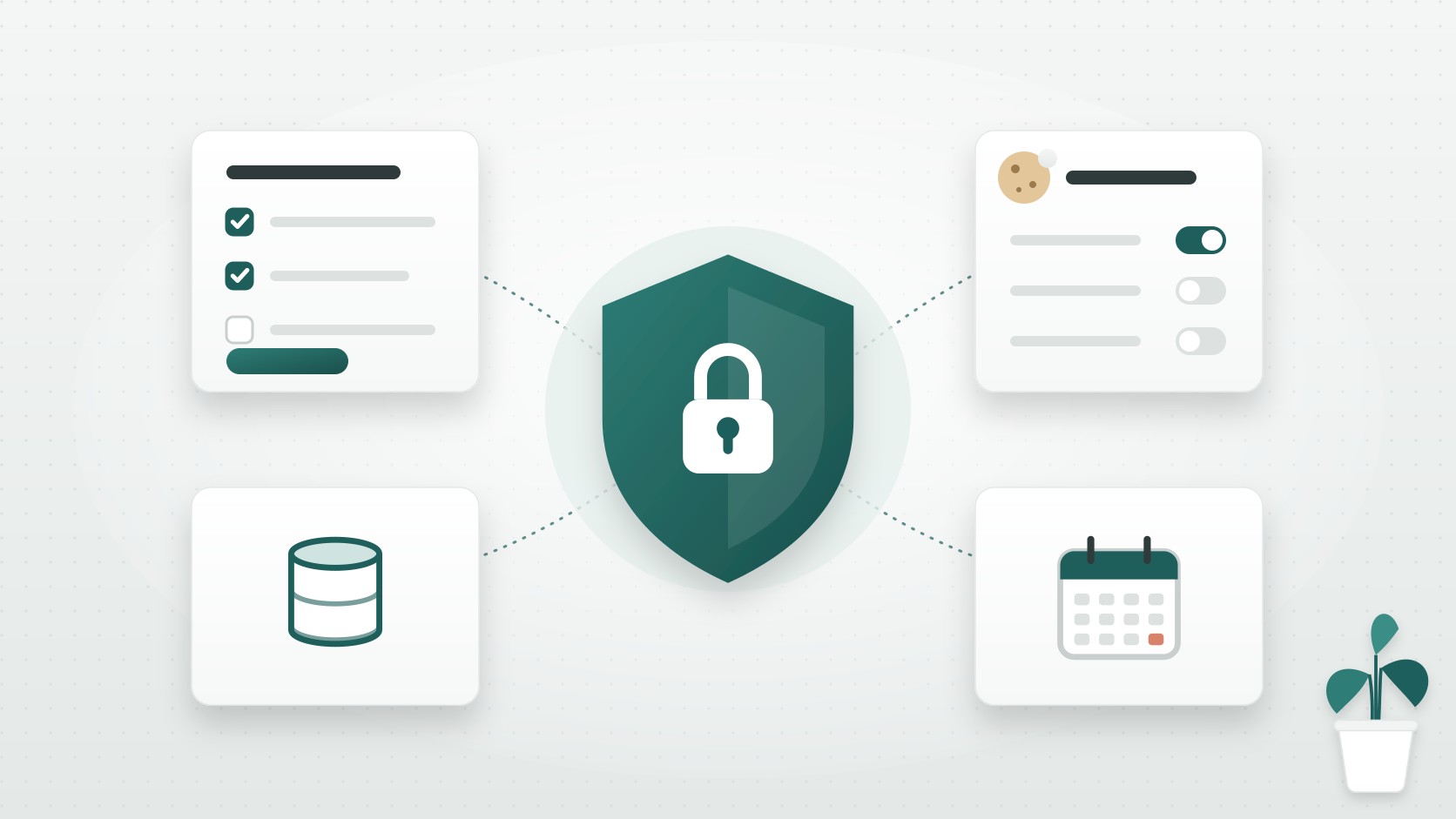
An MCP server is a door into your business data. Treat it with the same care as any API:
- Expose actions, not your whole database. "Find a customer by phone number" is far safer than "run any database query".
- Start read-only. Add actions that change data, such as creating, updating or sending, one at a time, with human approval for anything important.
- Use proper authentication. Each person should connect with their own identity and permissions, so the AI never sees more than the person using it.
- Keep secrets out of configuration files. GitGuardian's 2026 report found more than 24,000 unique secrets exposed in MCP configuration files in public code. Use a secrets manager instead.
- Log every call: who asked, which tool ran and what data came back.
- Vet third-party servers. Install community MCP servers only from trusted sources, and check exactly what they can access.
- Mind data protection. If an AI service processes personal data outside your country, check the rules that apply. In Egypt, that's the Personal Data Protection Law, and here's what it asks of businesses.
Do you need MCP?
You'll benefit from MCP if your team already uses AI assistants and spends time copying information between them and your systems, if you want an AI assistant inside your own product, or if you plan to use AI agents that act on business data.
You may not need it yet if your data isn't in one reliable system. MCP connects AI to your data; it doesn't fix data scattered across spreadsheets. In that case, a CRM or an ERP comes first.
Frequently asked questions
Is MCP only for Claude?
No. Anthropic created MCP, but it's now an open standard under the Linux Foundation's Agentic AI Foundation, supported by ChatGPT, Gemini, Microsoft Copilot, Cursor, Visual Studio Code and many other tools.
What's the difference between MCP and an API?
An API lets software talk to your system. An MCP server sits on top of your APIs and describes them in a way AI applications understand (which tools exist, what they do and what inputs they need) so any MCP-compatible assistant can use them without a custom integration.
Can MCP connect AI to a custom ERP or CRM?
Yes. If your system has an API or a database, an MCP server can expose selected functions of it to AI assistants. For custom systems, the server is usually built alongside the system's own API and uses the same permissions.
Is MCP secure?
The protocol supports secure setups, but security depends on how each server is built and deployed: what it exposes, how users sign in, where secrets are stored, and whether actions are logged and approved.
Where to go from here
AI is only as useful as the data it can reach. At GTech, we build the systems that make it useful: CRMs, ERPs and custom software with clean data and well-designed APIs, plus the connectors that let AI assistants work with them safely.
If you'd like your team to ask business questions in plain language and get answers from your own data, let's talk about it.